AI Voice
How an AI Receptionist Works
Give callers a useful first response and a clear next step.
Start with the essentials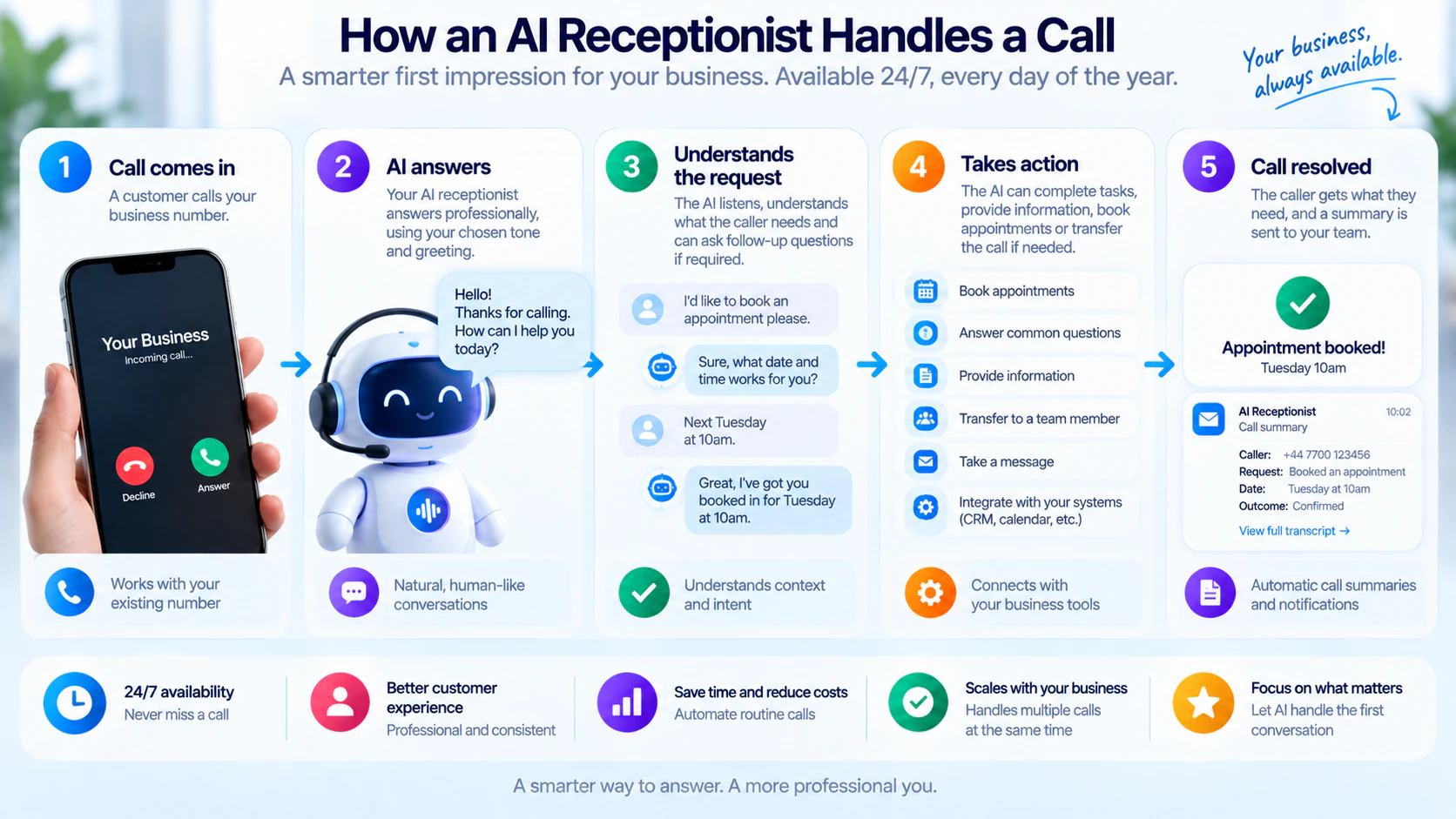
IN SIMPLE TERMS
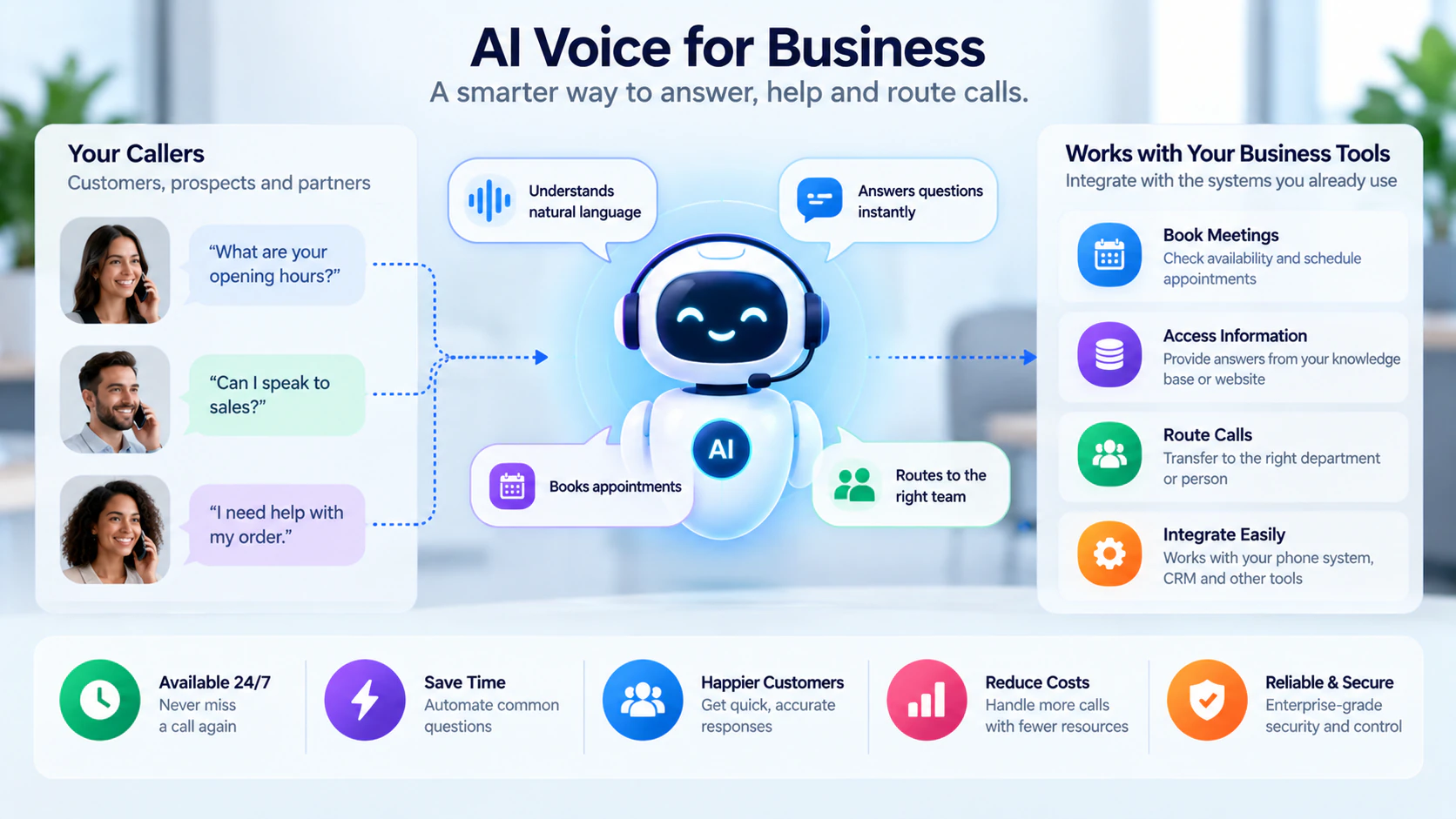
An AI receptionist can interpret a spoken request and follow a configured process for answering or handing over.
FROM THE IDEA TO YOUR WORKING DAY
What this means
for your business
A practice could test routing appointment enquiries to its reception team without automating sensitive decisions.
THE QUESTIONS THAT MATTER
Key
considerations
Set clear boundaries.
Make human handover easy.
Test accents, interruptions and unusual requests.
GO A LITTLE DEEPERTechnical deep dive
An AI receptionist is a controlled front door to the business. Its useful job is to understand a limited set of requests, provide approved information and connect the caller to the right next step.
Intent must resolve to an allowed destination
Speech processing may identify that a caller wants sales, a booking or an existing contact. The routing layer should map that intent to an approved destination rather than accept arbitrary transfer instructions. Ambiguous names and low-confidence interpretations need a clarifying question or a human fallback.
Lookups and actions need boundaries
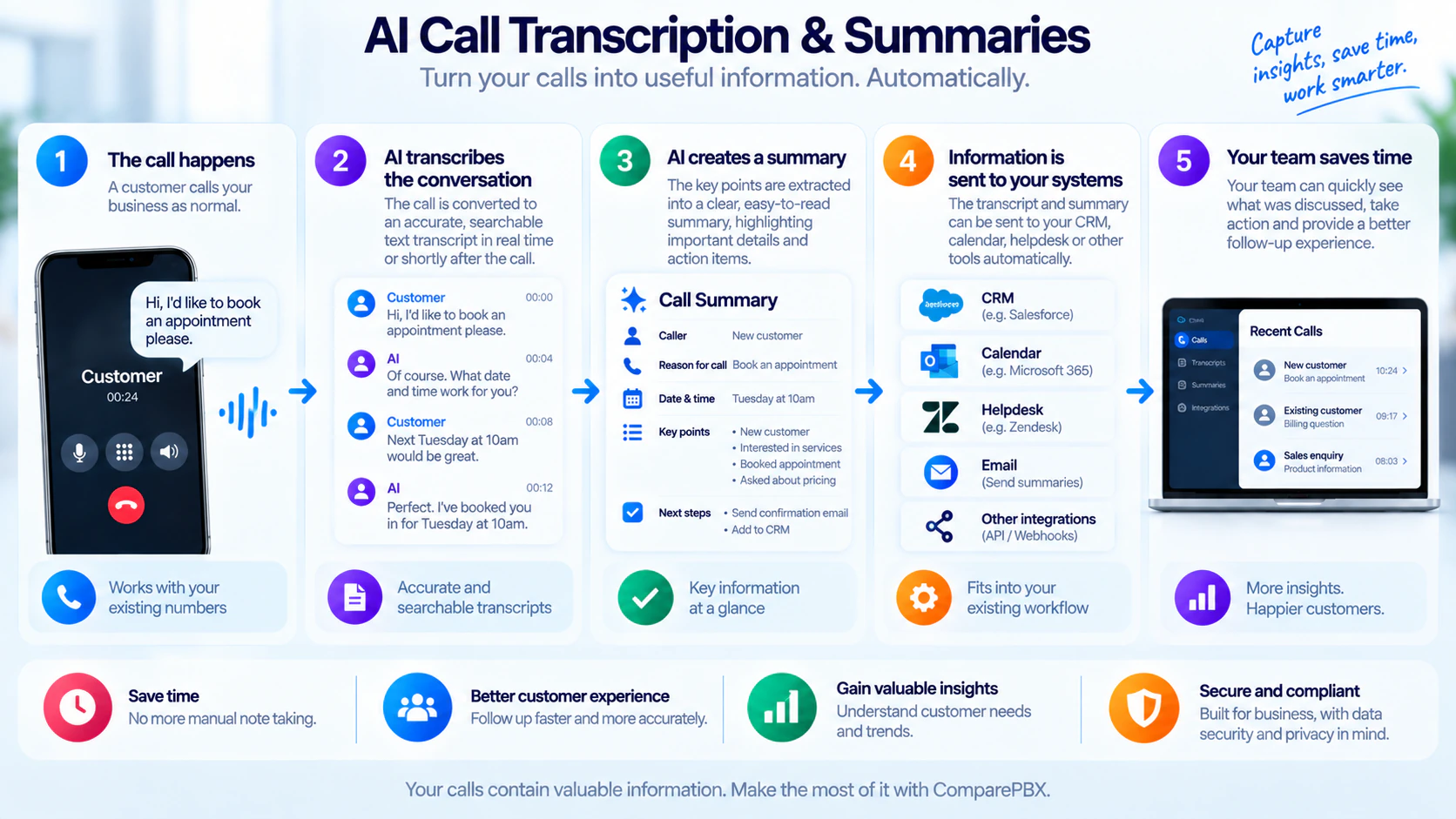
A calendar or CRM API can provide current information, but it also creates a permission boundary. Limit what can be read or changed, verify identity where needed and confirm consequential details. An answer spoken confidently is not evidence that a booking was saved; use the integration’s actual result.
Design for interruption and failure
Callers may interrupt, change their mind or ask for a person immediately. Test turn-taking, transfers to unavailable staff and failure of speech or lookup services. Keep an approved fallback greeting and destination so a technical problem does not leave the caller in an endless conversation.
Manufacturer & platform documentation
Optional further reading from the organisations behind the technology, including standards bodies. Platform examples describe that platform’s implementation.