AI Voice
AI Call Transcription & Summaries
Turn a conversation into text that people can review.
Start with the essentials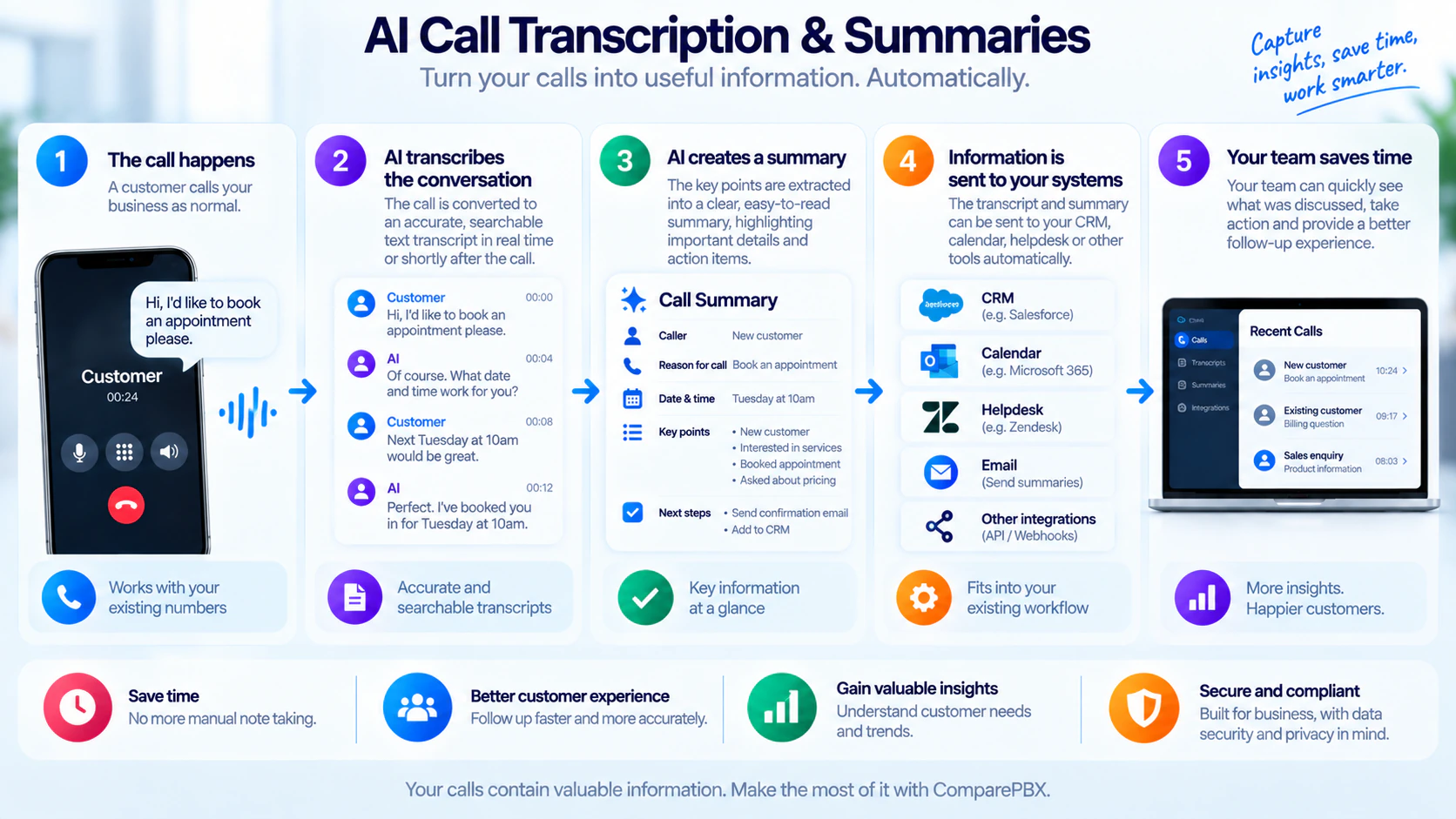
IN SIMPLE TERMS
Transcription produces written speech; a summary condenses information from a conversation. Neither should be assumed error-free.
FROM THE IDEA TO YOUR WORKING DAY
What this means
for your business
An account manager could review a draft call summary before adding an agreed follow-up to customer records.
THE QUESTIONS THAT MATTER
Key
considerations
Check accuracy with real examples.
Define who can access the output.
Plan review, retention and deletion.
GO A LITTLE DEEPERTechnical deep dive
Transcription and summarisation are different transformations of a conversation. A transcript is an estimate of what was said; a summary is a selective interpretation of that estimate.
Audio quality limits the transcript
Speech recognition processes live or recorded audio. Noise, overlapping speakers, accents and specialist terms can cause errors. Speaker separation and timestamps can help a reviewer find context, but they do not establish that words, identities or figures are correct.
Summaries need checks against the conversation
Summarisation can turn a long call into proposed actions or a CRM note. It can also omit qualifications or turn a tentative statement into a firm commitment. Review names, amounts, deadlines and agreed actions against the source before relying on them, especially before updating another system.
Treat derived records as data too
Audio, transcripts, summaries and searchable indexes may have different storage locations and retention settings. Restrict access, explain recording/processing appropriately and plan deletion across the relevant systems. Monitor sample accuracy with representative calls instead of assuming one successful demonstration proves ongoing reliability.
Manufacturer & platform documentation
Optional further reading from the organisations behind the technology, including standards bodies. Platform examples describe that platform’s implementation.