Business Phone Numbers
Business Phone Numbers Explained
Choose a number around the customers you want to reach.
Start with the essentials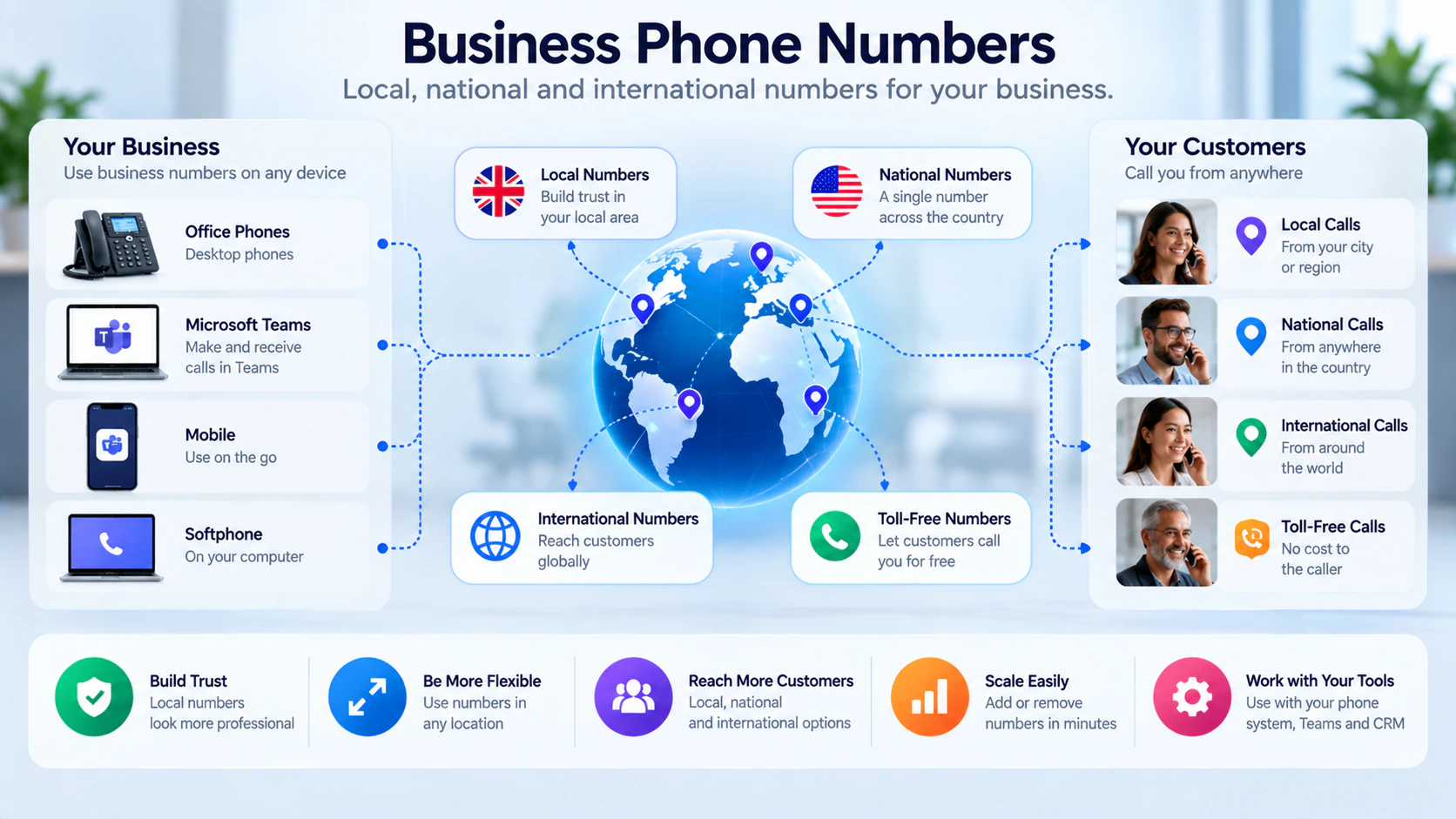
IN SIMPLE TERMS
A business number gives callers a way to reach your organisation. Number types and conditions vary by market.
FROM THE IDEA TO YOUR WORKING DAY
What this means
for your business
A business serving several countries can ask which numbers it can obtain and how callers will be routed.
SEE HOW IT CONNECTS
Number Porting
Plan how to keep a number when changing services.
Explore this guide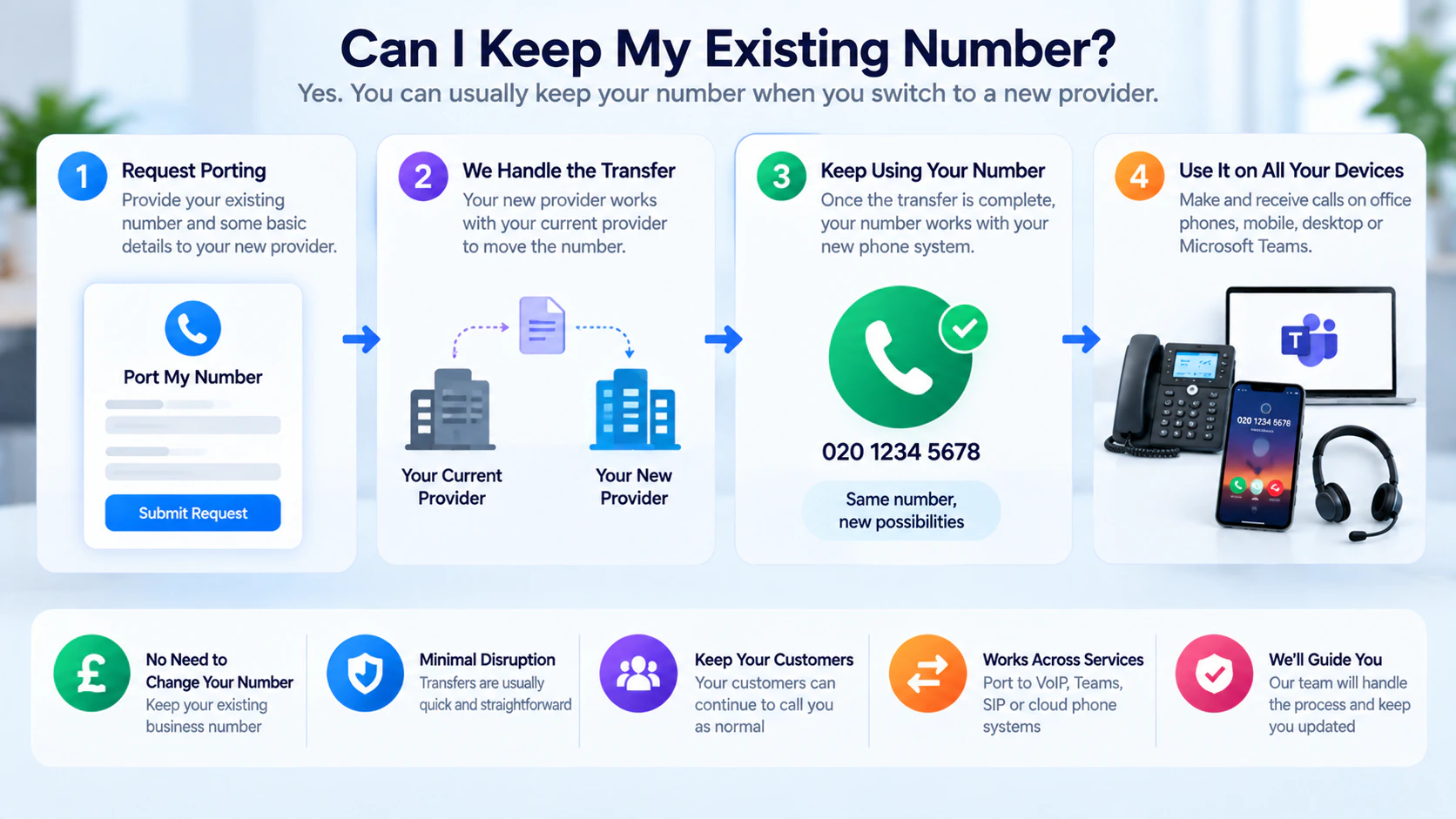
THE QUESTIONS THAT MATTER
Key
considerations
Check eligibility in each country.
Confirm caller and business charges in writing.
Ask whether a number can move with you.
GO A LITTLE DEEPERTechnical deep dive
A business number is a public address for reaching a service. In many modern systems its routing can change without replacing the devices people use, but eligibility, charges and location obligations still depend on the market and provider.
Allocation and DID/DDI routing
Numbering authorities manage national resources; carriers and providers allocate or assign numbers under the applicable arrangements. DID/DDI numbers allow an external caller to reach a specific destination. The receiving provider delivers the call and the business platform maps the called number to an extension, queue, menu or other service.
Number categories carry different expectations
Geographic numbers are associated with an area in the relevant numbering plan. Non-geographic numbers describe other service categories. Toll-free or freephone numbers generally shift eligible caller charges to the receiving business under the service terms; coverage and exceptions vary. A number available for international callers is not necessarily reachable or free from every country and network.
Caller ID is a separate direction
Caller ID or CLI is the identity presented on an outgoing call. It does not, by itself, determine where incoming calls to that number go, and it is not proof of a caller’s identity. Providers can require verification of the right to present a number. Agree presentation and inbound routing separately when connecting multiple offices or services.
Routing and office location can be separate
A supported cloud service can route an office number to approved endpoints in several locations. That flexibility does not remove national restrictions or emergency-location requirements. Ask whether the proposed use, users and locations are supported; do not treat an illustrated number type as a global rule.
Porting changes the serving provider
Number portability allows eligible numbers to move between providers under the applicable process. The gaining provider coordinates a request using the required account and authorisation details. Confirm the affected number range, dependent services and cutover plan before cancelling anything. Porting a number does not automatically recreate PBX routing, voicemail or caller ID settings.
Manufacturer & platform documentation
Optional further reading from the organisations behind the technology, including standards bodies. Platform examples describe that platform’s implementation.
LOCAL CONTEXT. A WIDER PERSPECTIVE.
Business number types
in your market
An illustrated overview for United States
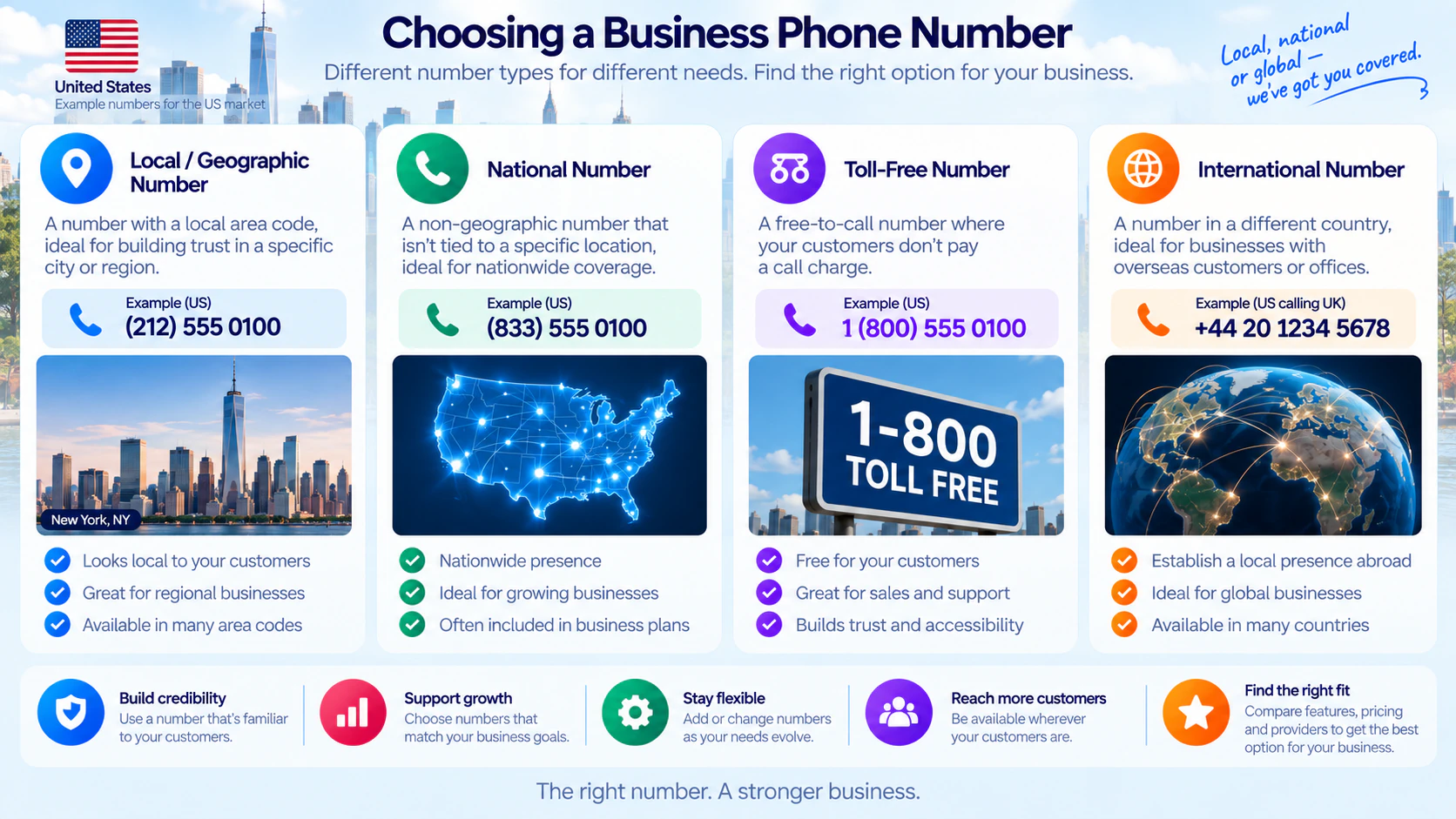
Use these illustrations as a starting point. Confirm number eligibility, caller charges, business charges and availability with the provider for the relevant country; examples in the artwork are not current tariffs or rules.