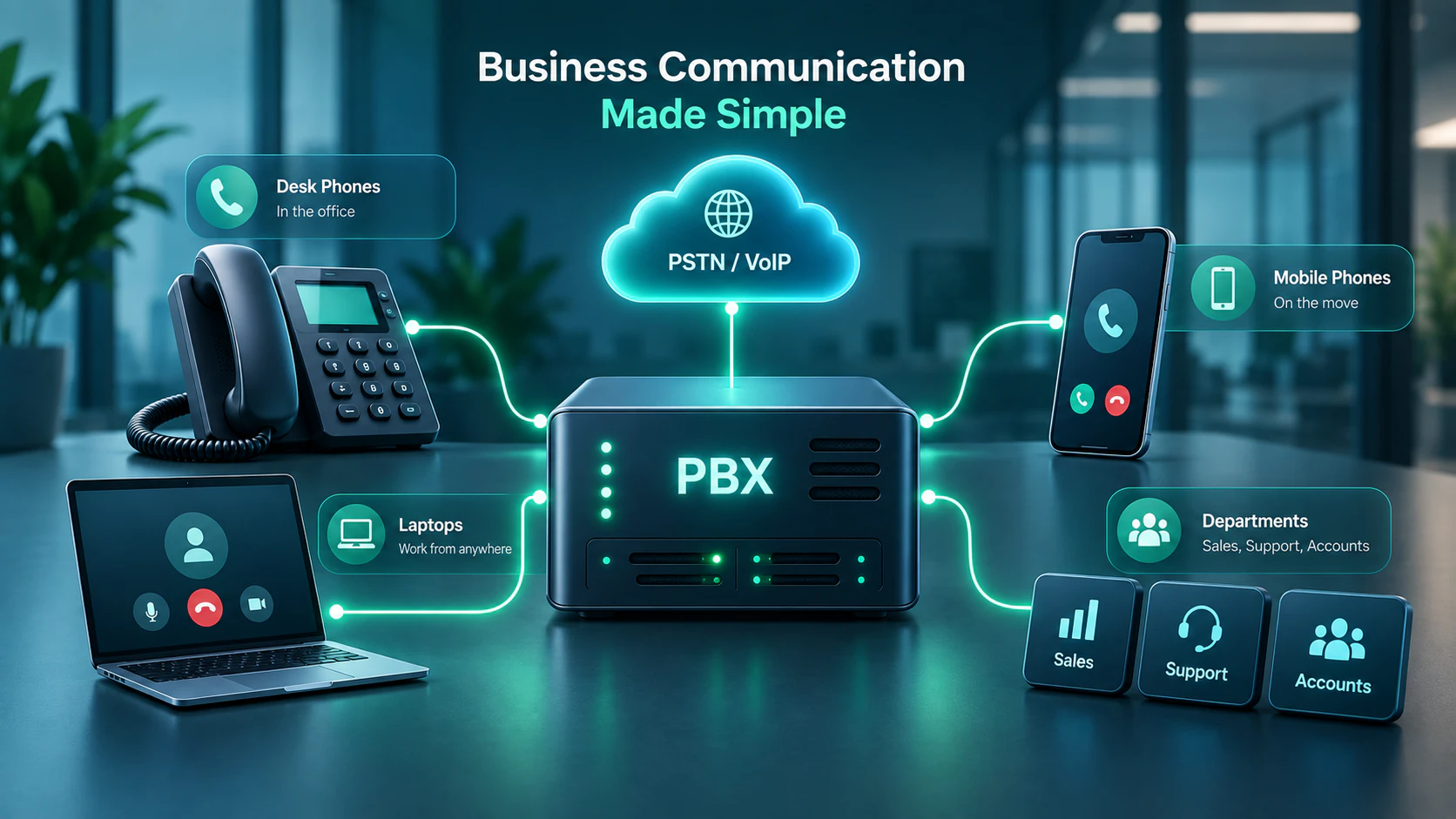
SIP
What is SIP Trunking?
Connect a business phone system to external calls over an IP connection.
Start with the essentials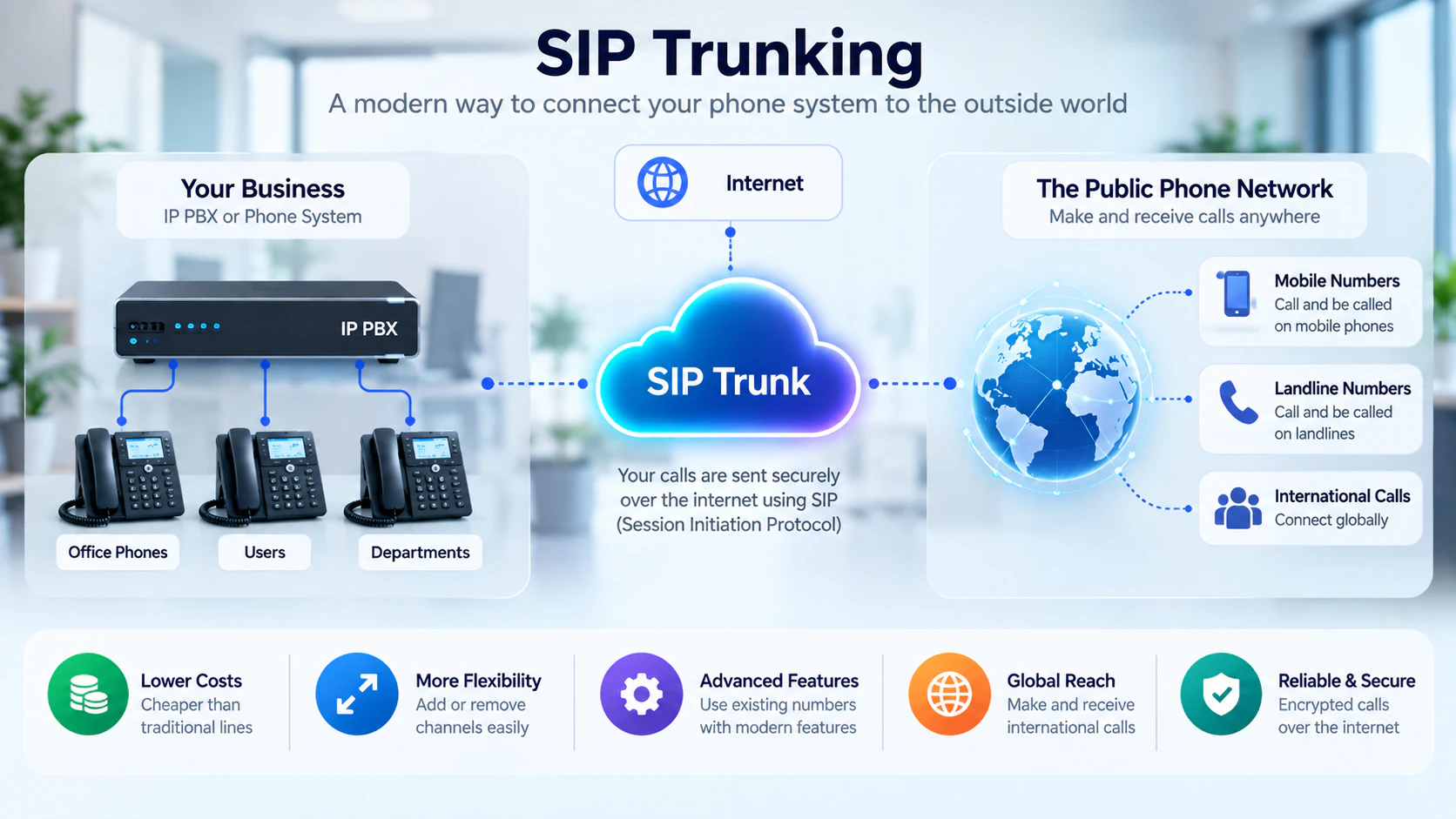
IN SIMPLE TERMS
A SIP trunk is a service that links a compatible phone system with a voice provider.
FROM THE IDEA TO YOUR WORKING DAY
What this means
for your business
A business keeping its PBX could investigate changing the connection used for outside calls.
SEE HOW IT CONNECTS
SIP vs SIP Trunking
Separate the protocol from the service you buy.
Explore this guide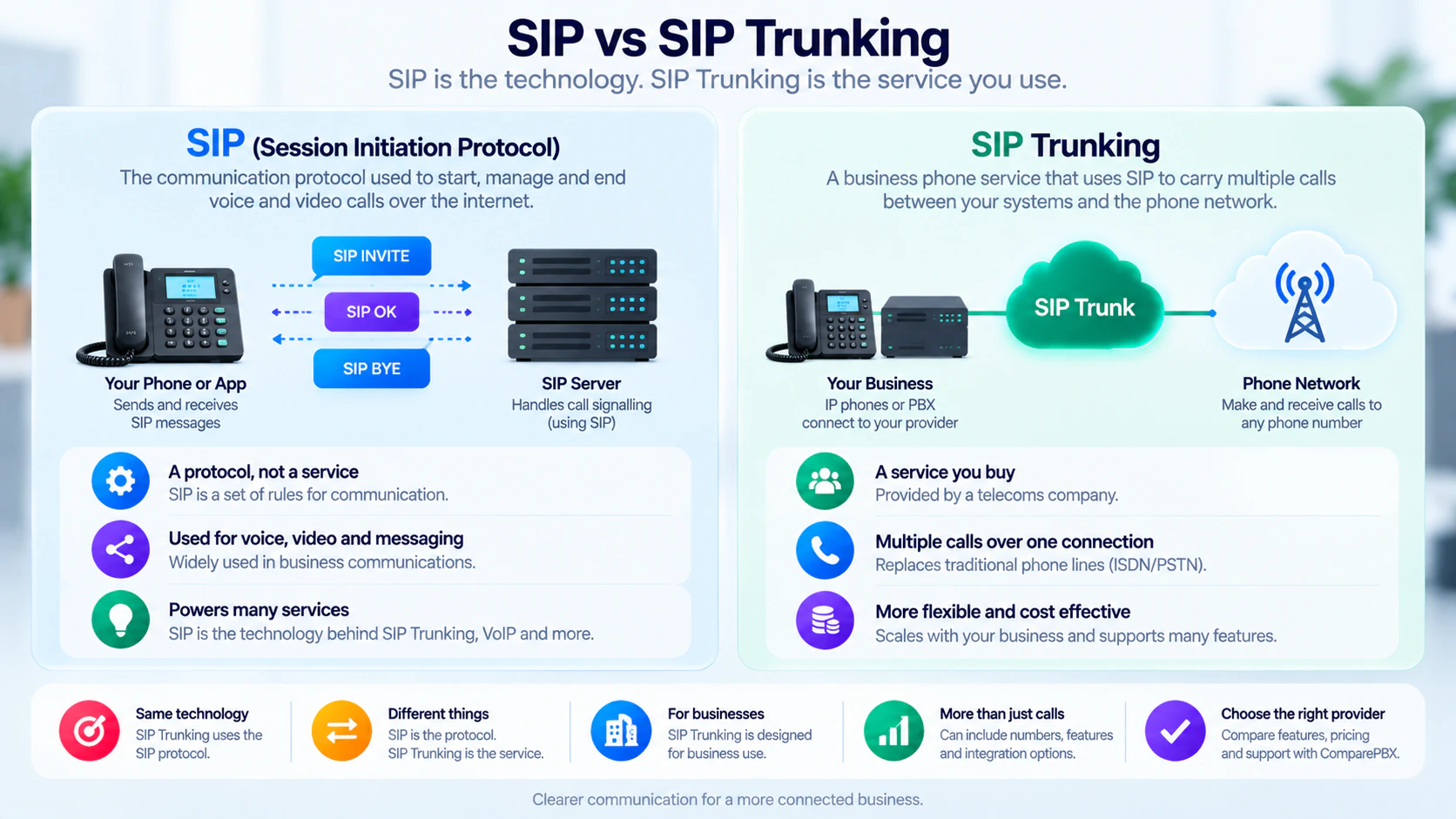
THE QUESTIONS THAT MATTER
Key
considerations
Confirm PBX compatibility.
Estimate simultaneous calls.
Discuss number transfer and failover.
GO A LITTLE DEEPERTechnical deep dive
A SIP trunk is a logical connection between a business phone system and a voice service. It replaces the idea of a fixed bundle of physical telephone lines with an IP connection whose capacity, numbering and behavior still need to be agreed.
Channels and numbers are separate
SIP signalling establishes calls across the trunk; a media path carries audio. Concurrent calls, sometimes sold as channels or sessions, describe how many conversations the service permits at once. DIDs/DDIs identify inbound destinations. Ask how inbound, outbound and transferred calls count towards limits, and what happens when capacity is exhausted.
Inbound and outbound rules
The provider delivers incoming calls with destination information that the PBX uses to find a user, queue or menu. Outbound rules choose a trunk and format the dialled number. Number presentation, also called CLI or caller ID, identifies the caller to the receiving network. The provider may restrict presented numbers to ones the business is authorised to use.
Prove which system is allowed to connect
Registration-based trunks typically use account credentials; IP-based authentication recognises agreed network addresses. The available method depends on the service. Changes to public IP addresses, credentials or failover sites can therefore affect calling. Limit access to authorised systems and document how those changes are coordinated with the provider.
SIP support is only the starting point
Interoperability includes codecs, number formats, touch-tone signalling, transfers and caller ID behavior. An SBC can mediate the boundary between networks and help with policy, address handling and media interworking. It does not remove the need to test the exact PBX, carrier and supported firmware combination.
Network reachability and failover
NAT and firewall configuration must account for signalling and audio, including the provider’s supported addresses and ports. Codec choice and concurrent calls influence bandwidth. A backup route needs enough capacity and a defined trigger; test both incoming and outgoing calls because provider-side inbound failover differs from a PBX selecting an alternative outbound trunk.
External calling has service obligations
Emergency calling, location information, number eligibility and permitted caller ID differ by country and service. Ask the carrier and implementation partner to confirm the arrangements for each site and remote user. Do not assume that moving a number or presenting it from a new location automatically updates emergency-routing information.
Manufacturer & platform documentation
Optional further reading from the organisations behind the technology, including standards bodies. Platform examples describe that platform’s implementation.