Contact Centre
Call Centre vs Contact Centre
The difference starts with the conversations you support.
Start with the essentials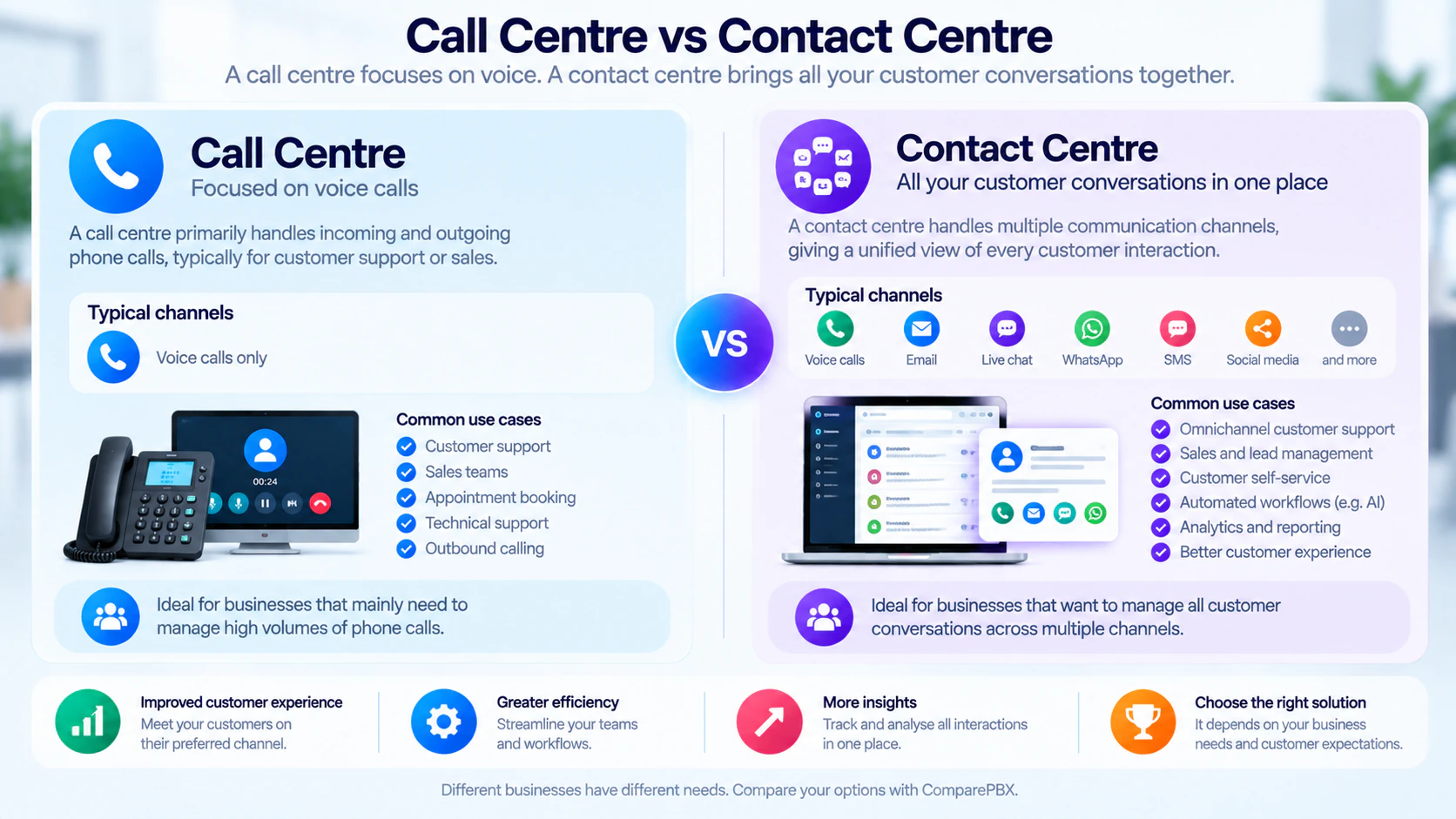
IN SIMPLE TERMS
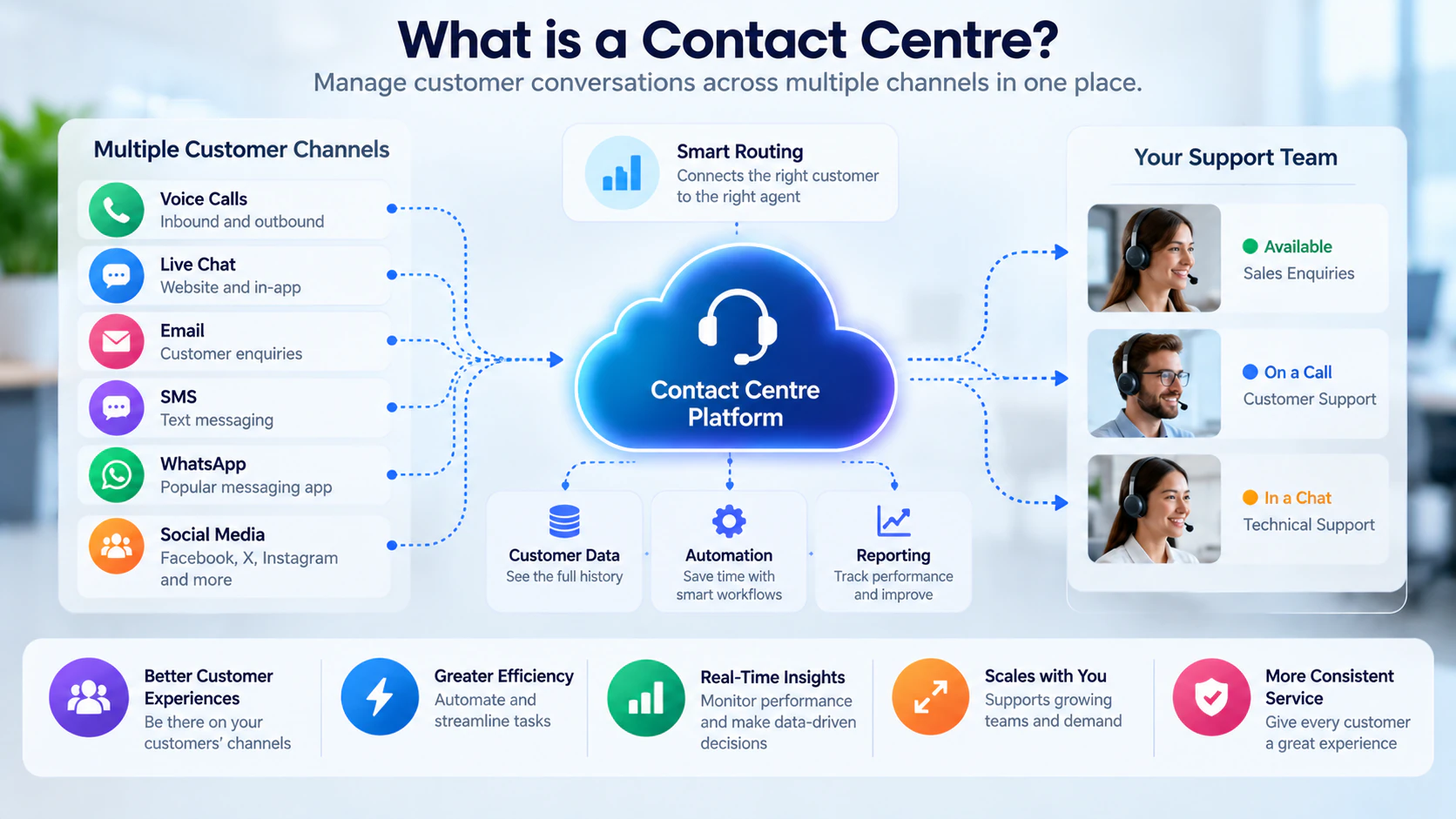
A call centre focuses on telephone calls. A contact centre may also handle channels such as email, chat or messaging.
FROM THE IDEA TO YOUR WORKING DAY
What this means
for your business
A retailer could connect a customer’s web enquiry with a later phone conversation, if its tools support that workflow.
THE QUESTIONS THAT MATTER
Key
considerations
Choose channels your team can support well.
Check how context follows a customer.
Plan staffing and escalation.
GO A LITTLE DEEPERTechnical deep dive
The architectural difference is how customer work is represented and routed. A voice-focused operation mainly routes calls; a broader contact centre may coordinate conversations across several channels.
Calls and messages have different timing
A call requires someone available now. Email or messaging may allow delayed responses and different concurrency rules. A shared routing engine needs channel-aware capacity and priorities so agents are not assigned more live work than they can handle.
Shared history needs reliable matching
Joining a voice interaction to chat or CRM history depends on identifiers, permissions and data quality. Decide when identity must be verified and what context follows a handoff. A customer’s earlier messages should not be exposed simply because a telephone number happens to match.
Measure service outcomes consistently
Response time, resolution and backlog mean different things across channels. Define each metric and the start/end events behind it. Workforce planning and quality review should account for the work after a conversation, not only the time spent speaking.
Manufacturer & platform documentation
Optional further reading from the organisations behind the technology, including standards bodies. Platform examples describe that platform’s implementation.