IN SIMPLE TERMS
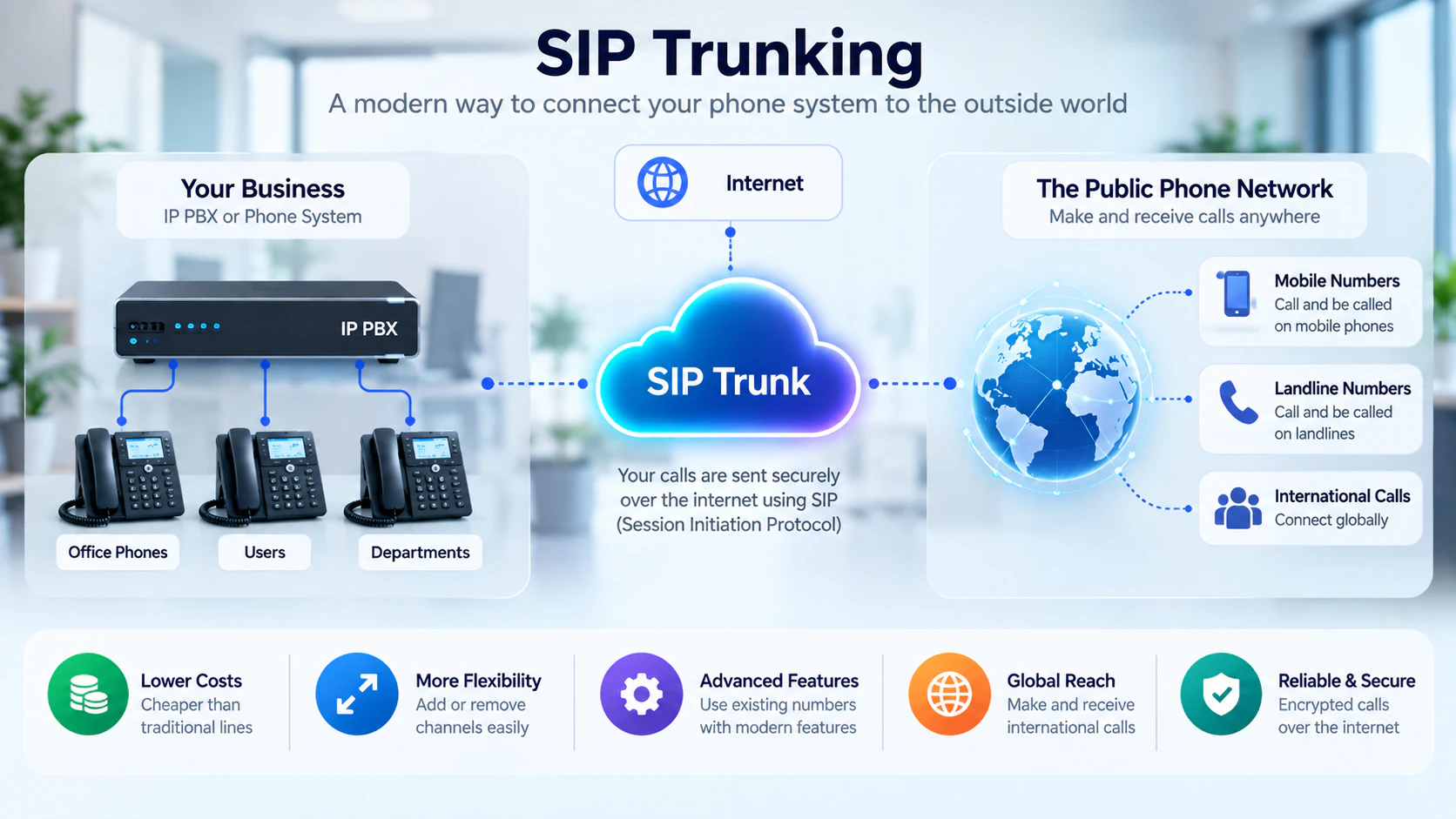
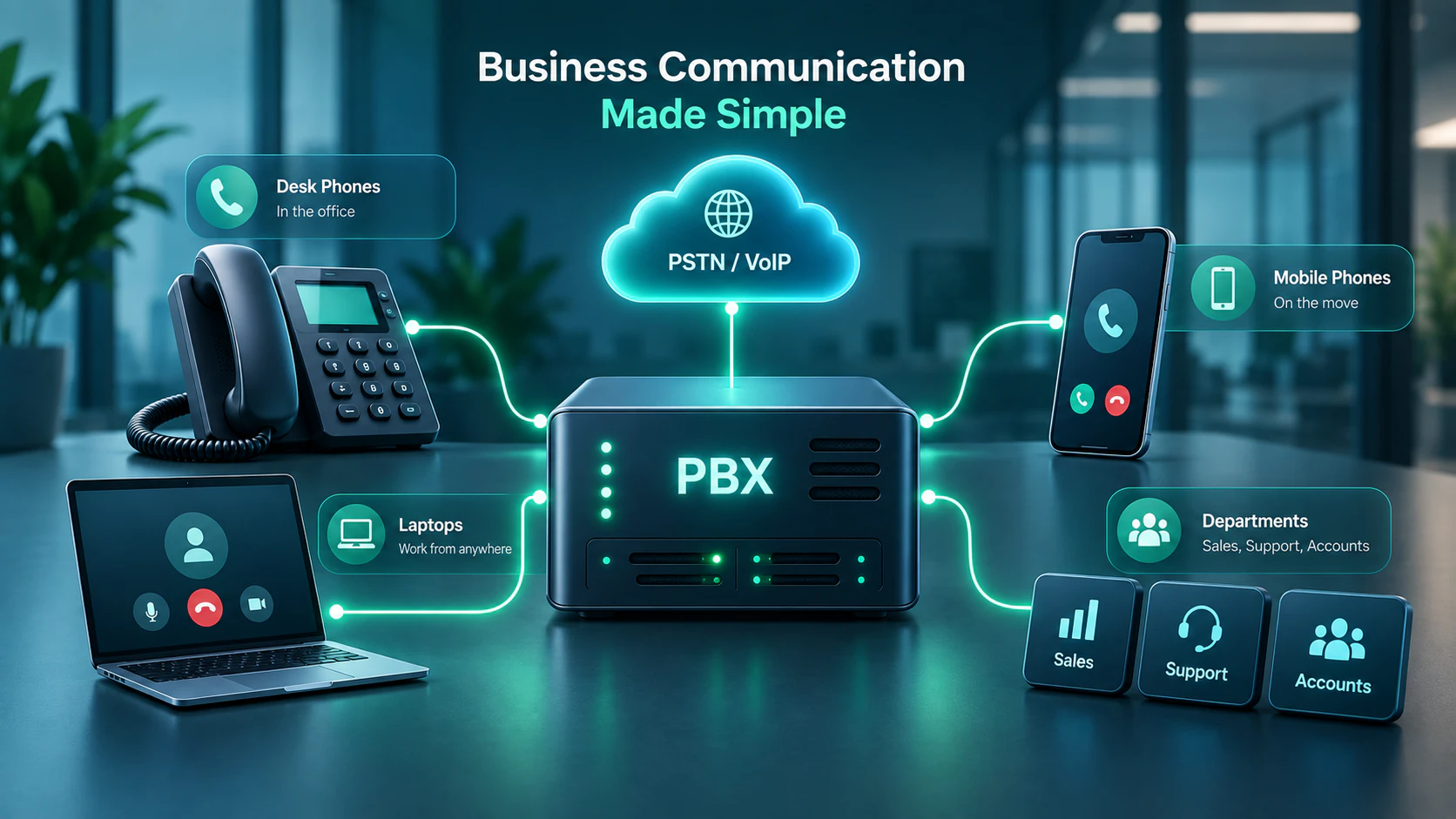
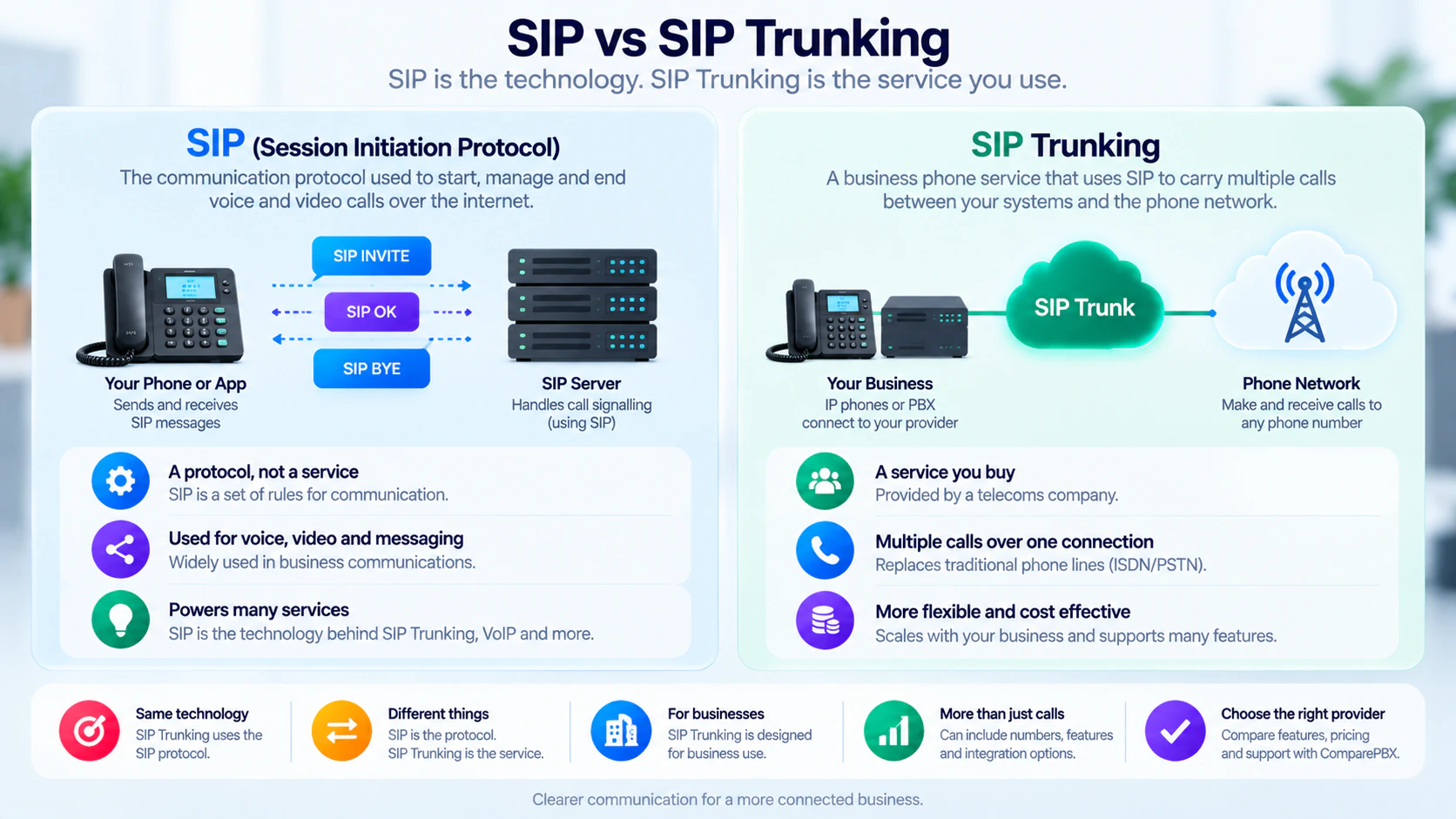
SIP describes how systems signal to each other. SIP trunking is a business voice service that uses that signalling.
FROM THE IDEA TO YOUR WORKING DAY
What this means
for your business
When reviewing a proposal, distinguish a SIP-compatible device from the trunk service connecting it to callers.
THE QUESTIONS THAT MATTER
Key
considerations
Ask what the service includes.
Check supported devices and configurations.
Clarify capacity and support responsibilities.
GO A LITTLE DEEPERTechnical deep dive
SIP is a protocol; SIP trunking is a service arrangement that uses it. The distinction helps separate a device’s technical capabilities from the external calling service a business buys.
A signalling language does not supply a service
SIP defines how systems arrange sessions. It can be used between a phone and a PBX, between systems, or across a carrier connection. Supporting SIP does not automatically supply a telephone number, external call permissions, billing or operational support.
A trunk adds capacity and provider rules
A SIP trunk brings authentication, public numbers, routing, concurrent-call limits and a commercial service boundary. Its provider and PBX need to agree formats and behavior. A successful registration is useful, but it is not proof that transfers, caller ID and two-way audio will all work.
The audio is a separate compatibility question
SIP messages negotiate the session while media commonly uses RTP. Codecs, touch-tone handling and reachable media addresses also need to match. Test actual call scenarios across the trunk instead of relying on the words ‘SIP compatible’ in a device description.
Manufacturer & platform documentation
Optional further reading from the organisations behind the technology, including standards bodies. Platform examples describe that platform’s implementation.