VoIP
What is VoIP?
VoIP carries telephone conversations over an internet connection.
Start with the essentials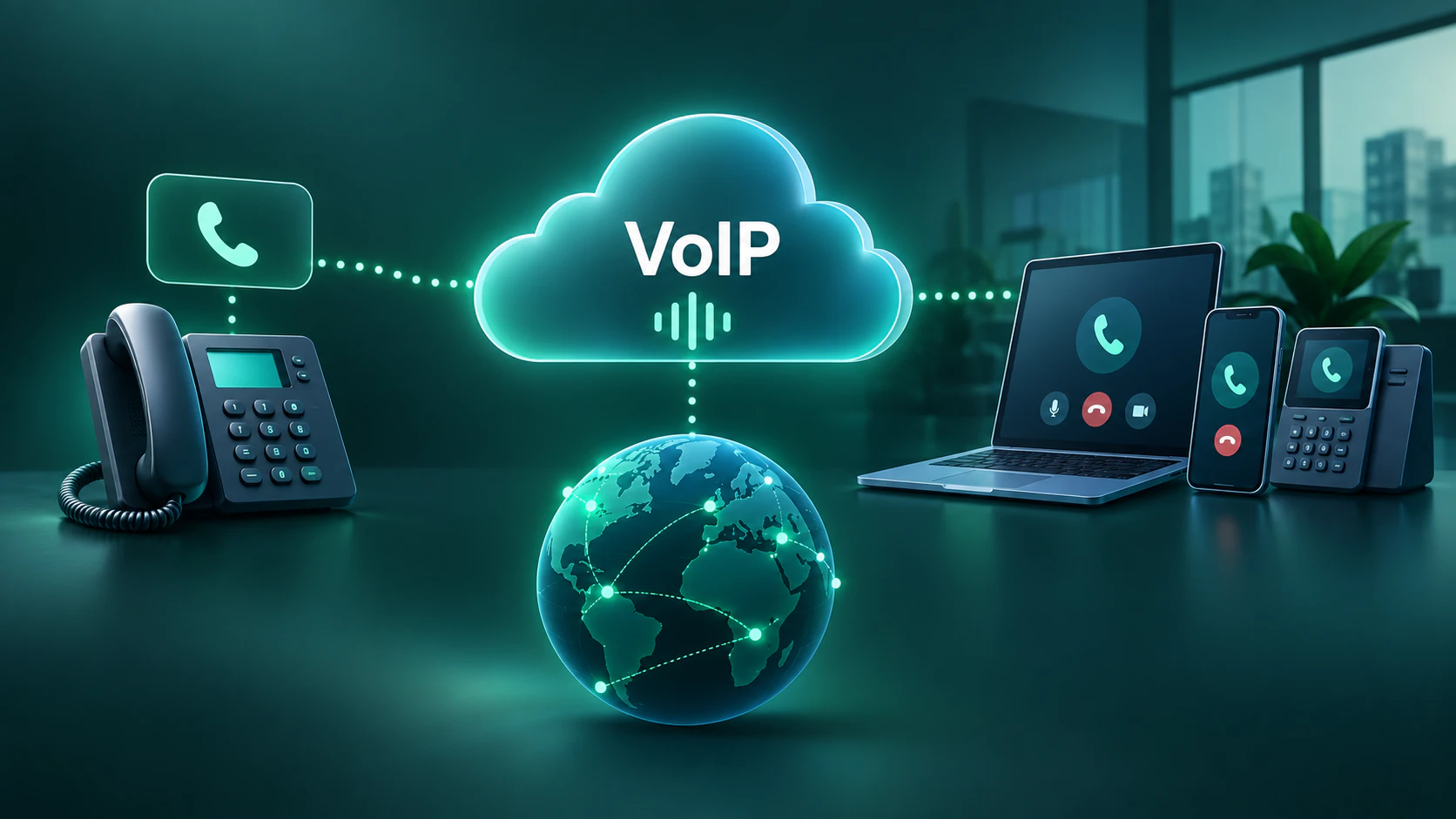
IN SIMPLE TERMS
Your team can make business calls using compatible phones or apps connected to a voice service.
FROM THE IDEA TO YOUR WORKING DAY
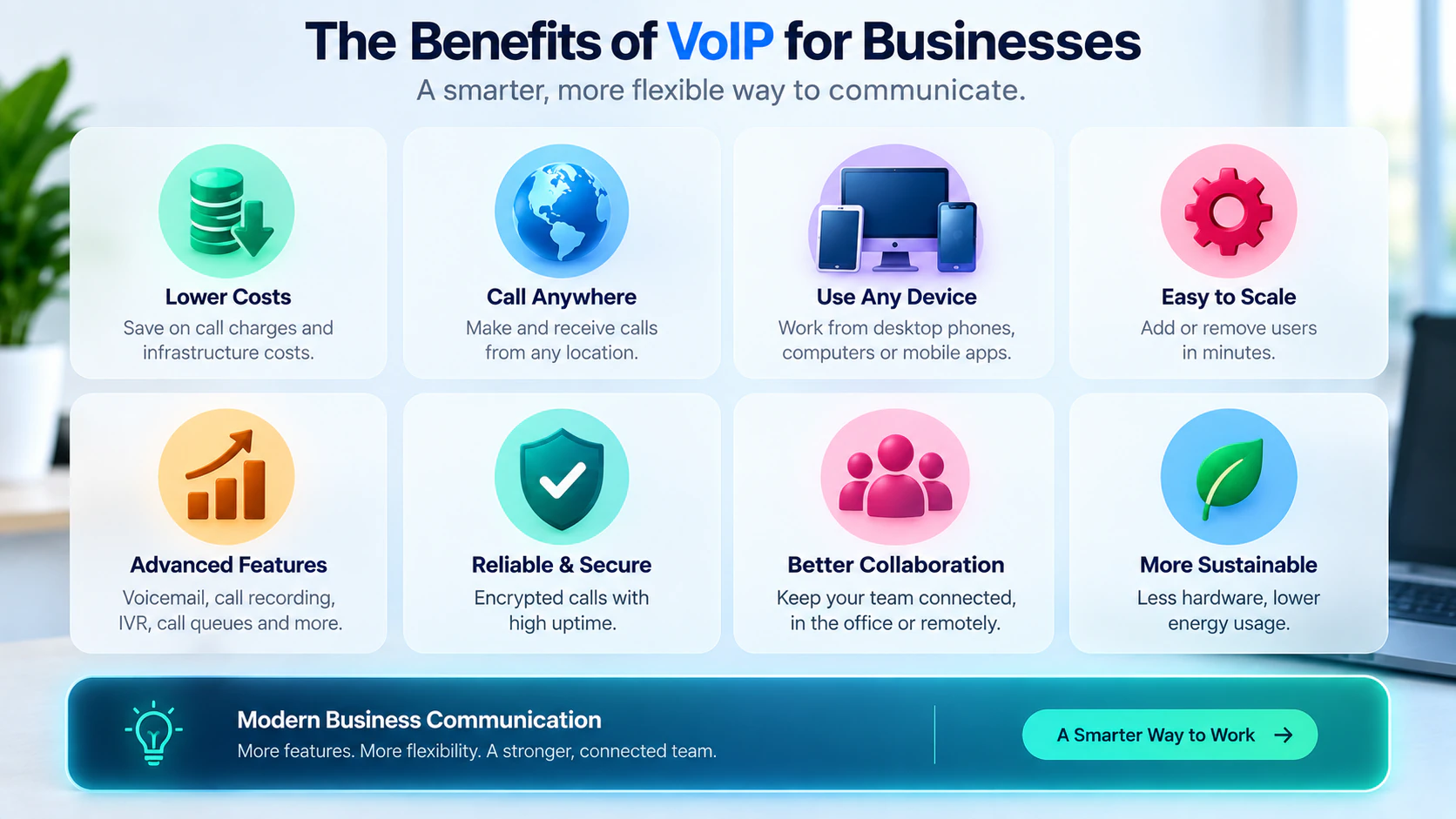
What this means
for your business
A small consultancy could answer the same business number from its office and from home.
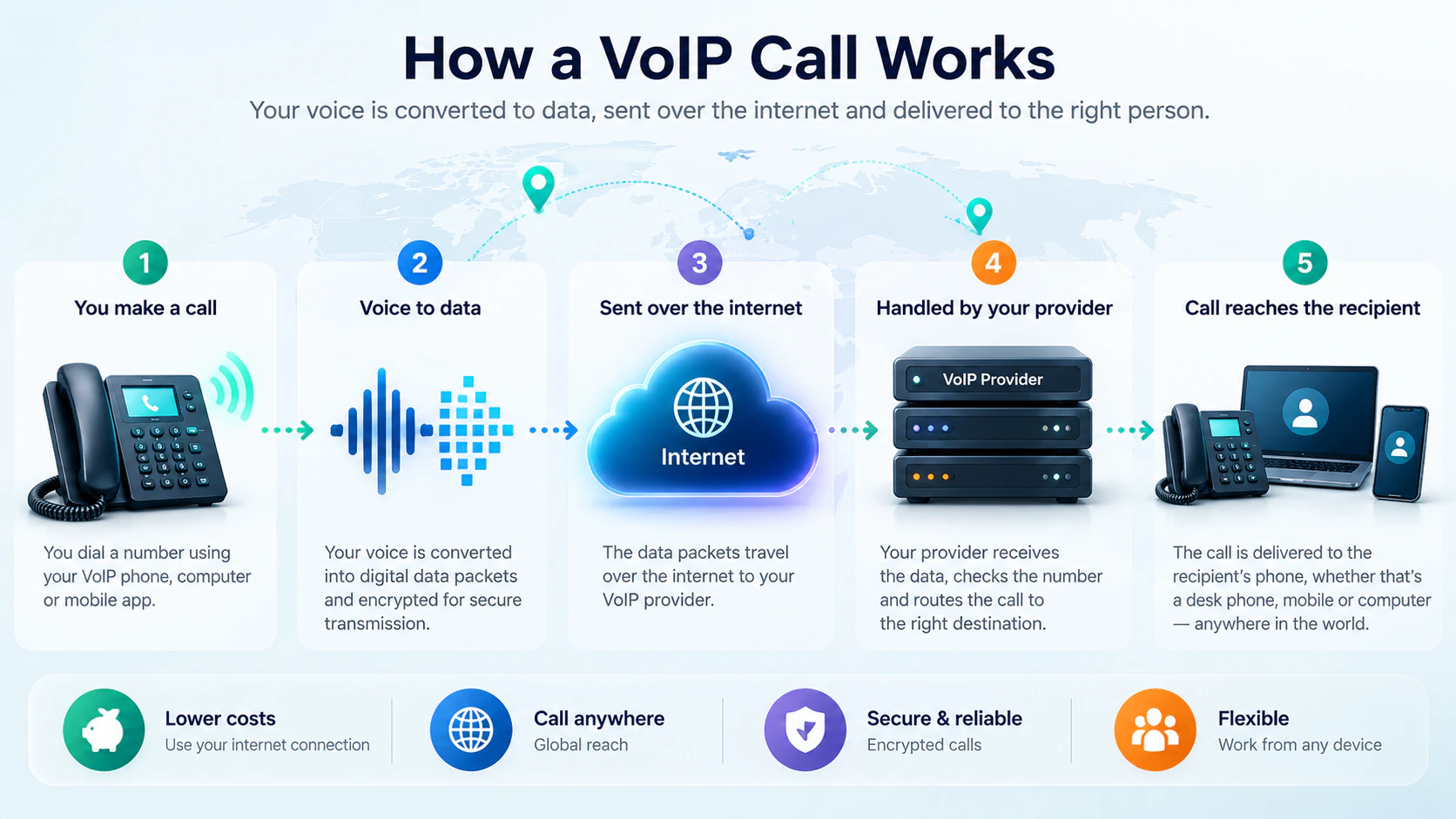
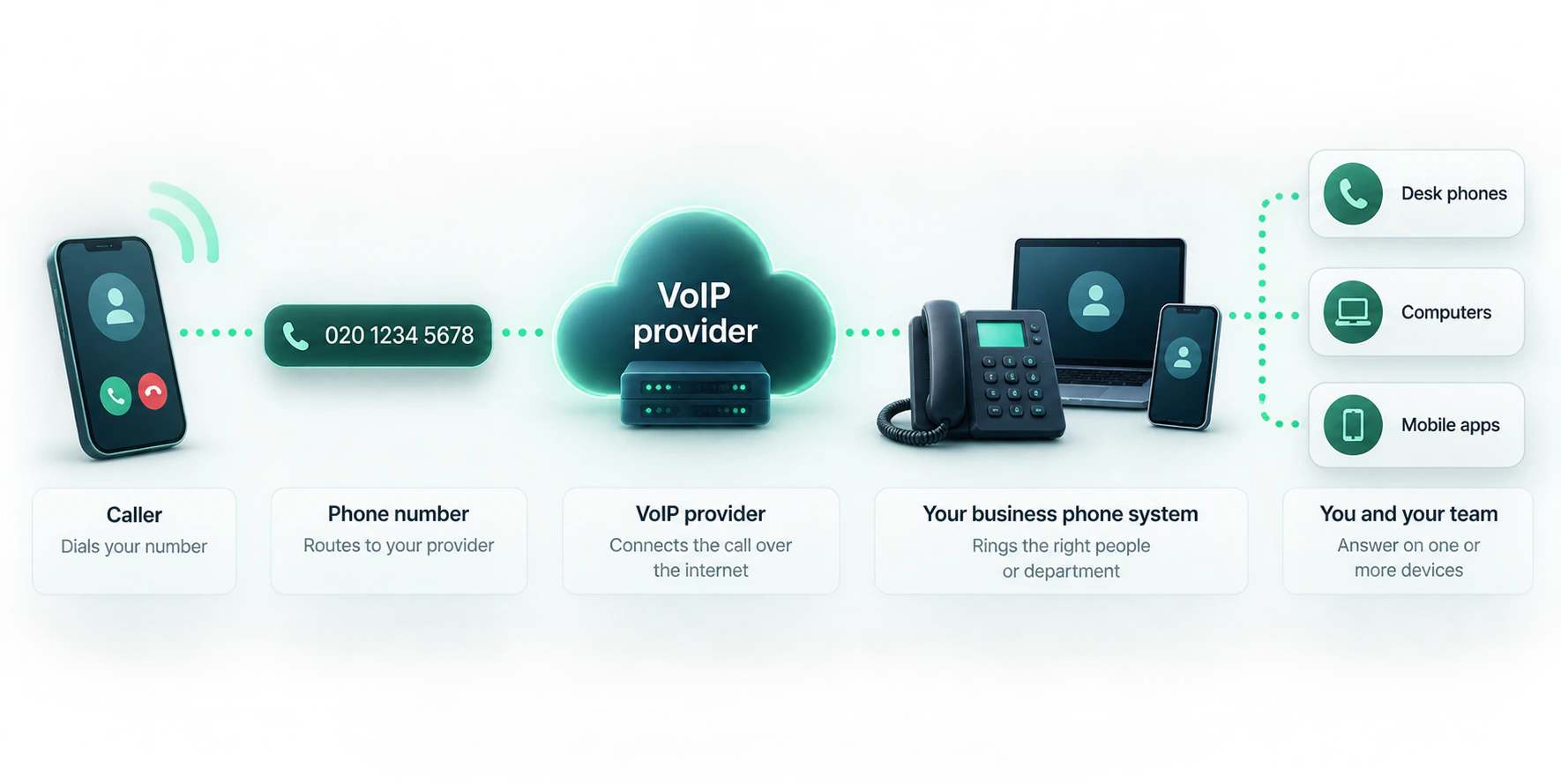
SEE HOW IT CONNECTS
From your team to the person listening.
THE QUESTIONS THAT MATTER
Key
considerations
Check your internet connection and how calls are handled during an outage.
List the phones and apps your team needs.
Ask how existing numbers and call flows would move.
GO A LITTLE DEEPERTechnical deep dive
VoIP is a method of transporting voice over IP networks. A working business service combines endpoints, call-control software, network connectivity and, when needed, a connection to the public telephone network. Those parts can be supplied and supported by different organisations.
Voice becomes packets
An endpoint samples sound and uses a codec to encode it. Small chunks travel as packets and are decoded at the destination. The choice of codec affects audio detail and bandwidth, while microphones, room noise and the network also influence what a caller hears. A wideband-capable phone does not guarantee wideband audio across every call leg.
Call control is separate from media
Signalling handles invitations, ringing, transfers and ending a call. SIP is widely used for this coordination. Media transport carries the speech, often using RTP or its secure form, SRTP. Separating the two explains why a system can manage calls centrally while audio follows a different route.
Accounts, endpoints and IP addresses
A telephone number or user account identifies whom to reach; an IP address helps the network reach a device or service. SIP registration commonly maps an account to its current contact location. DNS, IP addressing and reliable connectivity therefore matter even if the person using the phone never sees those settings. A number is not permanently tied to one handset.
Hosted and local components
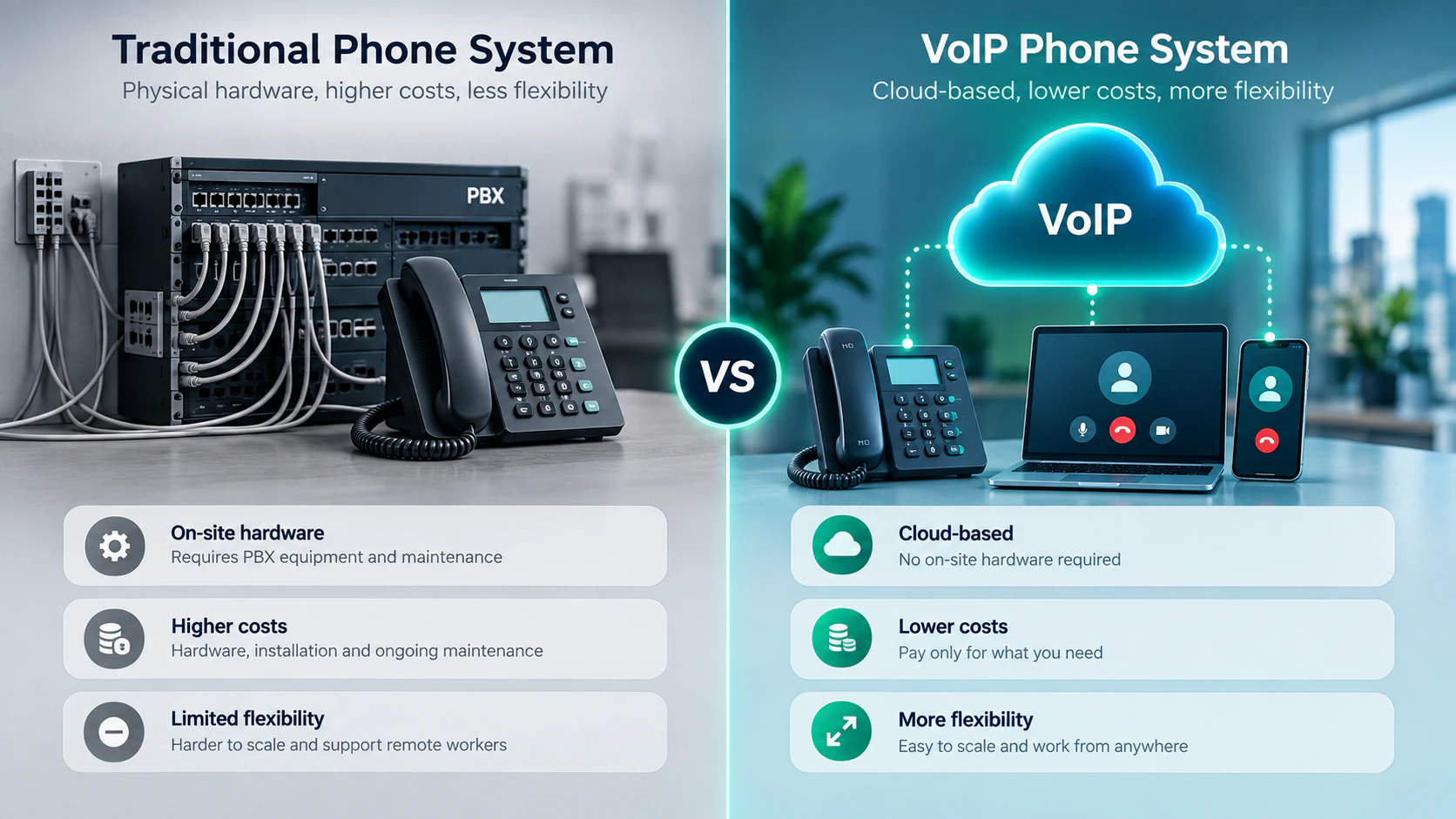
A hosted platform runs call-control services outside your office. An on-premises IP PBX runs locally, while a SIP trunk can connect it to external callers. Both use VoIP; neither removes the need to manage endpoints, power and the access network. A softphone is an endpoint too, with the computer, headset and operating system forming part of the supported setup.
Network design is part of the phone system
QoS helps give time-sensitive voice traffic priority on a managed network. NAT and firewall rules must also let supported signalling and media reach their destinations. A busy Wi-Fi network or interrupted internet connection can affect calls independently of the PBX. Check remote-working locations as well as office cabling and power backup.
Security has several layers
Encrypted transport, account protection and managed devices address different risks. TLS and SRTP can protect supported call legs, but do not automatically provide end-to-end protection through every carrier, recorder or integration. Ask who can change routing, retrieve recordings or provision a phone, and how access is removed when a person leaves.
Manufacturer & platform documentation
Optional further reading from the organisations behind the technology, including standards bodies. Platform examples describe that platform’s implementation.
- IETF / RFC EditorSIP: Session Initiation Protocol (RFC 3261) (external website)
- IETF / RFC EditorReal-time Transport Protocol (RFC 3550) (external website)
- IETF / RFC EditorSecure Real-time Transport Protocol (RFC 3711) (external website)
- 3CXFirewall and router configuration — a platform example (external website)